
Cooperative infrastructure
Build knowledge in common.
Shared cognitive infrastructure for organisations and communities that want their knowledge to grow through cooperation. A common memory connects contributions; clear governance sets the terms of participation.
Different ways to cooperate
A common foundation.
A cooperative can use shared cognitive infrastructure across its activities; a network can use it around a common purpose. A data cooperative places member governance of data and its use at the centre. These arrangements can bring together different organisations, each with its own knowledge, responsibilities and boundaries.
Communities of knowledge
Connections create new value.
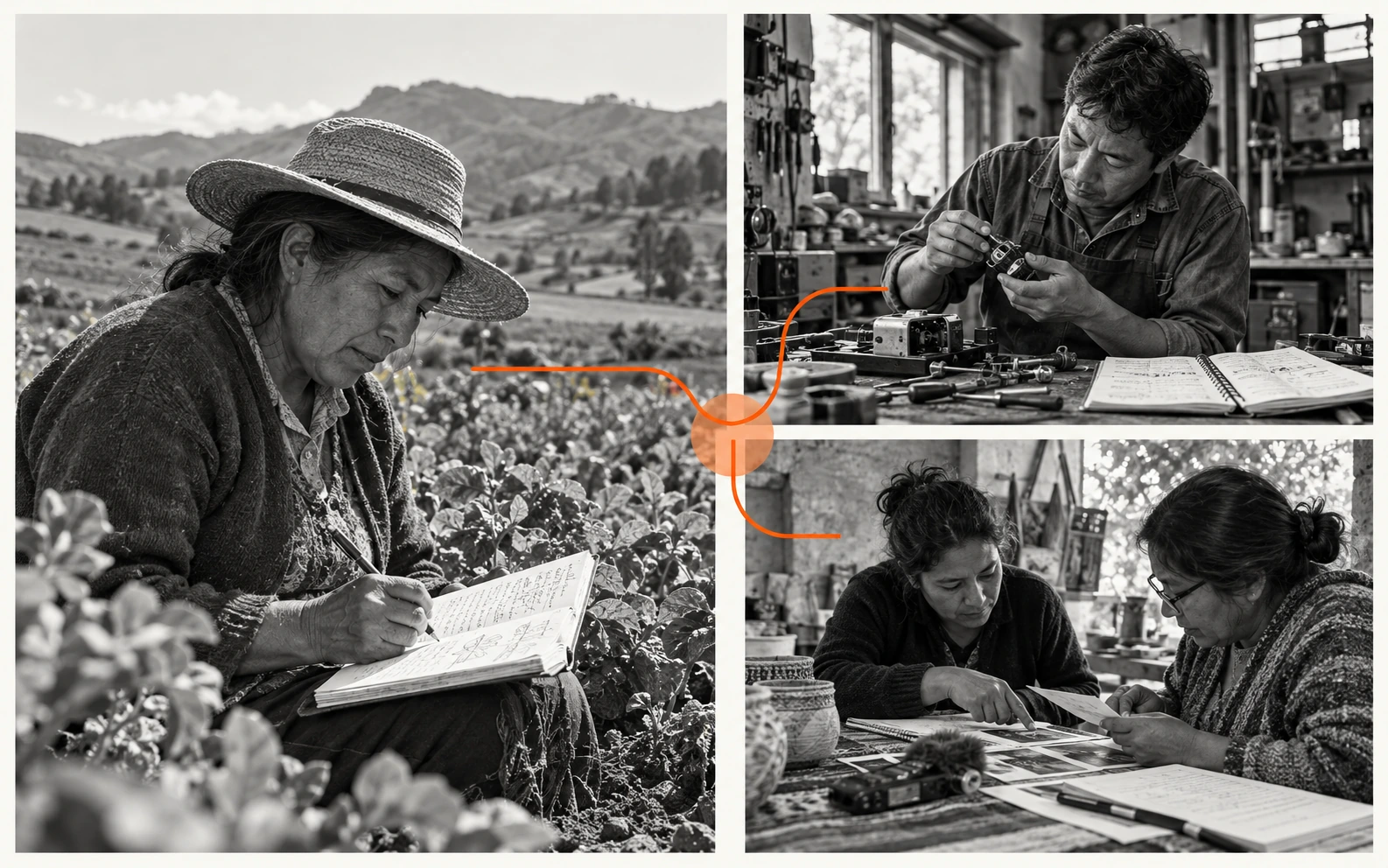
A maintenance record can become more useful alongside another organisation’s experience. A local observation can add context to a wider pattern. Communities of knowledge develop those relationships over time. XAB provides a memory structure for connecting records, preserving where they came from and making accumulated knowledge available to the people and models authorised to use it.
Data cooperatives
Let members shape the rules.
Data cooperatives offer a way to govern shared data and knowledge through their members. Before connecting sources, agree who can contribute, which purposes the infrastructure serves and how access is granted or reviewed. Keep authorship and provenance with contributions, and set explicit permissions for what can be shared. The cooperative’s governance determines these rules; the XAB instance is configured to support the agreed scope and access boundaries.
Begin with a shared question
Start with something worth sharing.
Choose a common question, map the relevant sources and define the entities and relationships the community needs. Begin with an agreed set of exchanges and a dedicated memory. Test whether one participant’s contribution helps another understand a problem, make a decision or avoid repeating earlier work.
Between communities
Cooperation between memories.
Cooperation between memories should preserve each participant’s knowledge structure and access boundaries. Define what can be shared, for which purpose and with whom. The technical architecture sets out the current federation mechanism and its next development direction.
Bring a shared question.
Outline the community, the sources and the purpose a shared memory would serve.
Prepare a cooperative brief